Here is something adults usually don't tell you about the jobs you are getting ready for. The companies hiring you are already deciding what kind of work people will do next to AI, and they are sorting it into two piles.
Deloitte, one of the biggest consulting firms in the world, just published a report on how companies are using AI. It is called Artificial Intelligence. Original Advantage., and it is based on a survey of 1,278 business leaders across 18 economies around the Pacific, including the United States, Canada and Mexico, plus India, along with interviews with 50 CEOs and senior executives. It was written for CEOs, not for you. But one idea in it is worth knowing now.
Two Kinds of Work
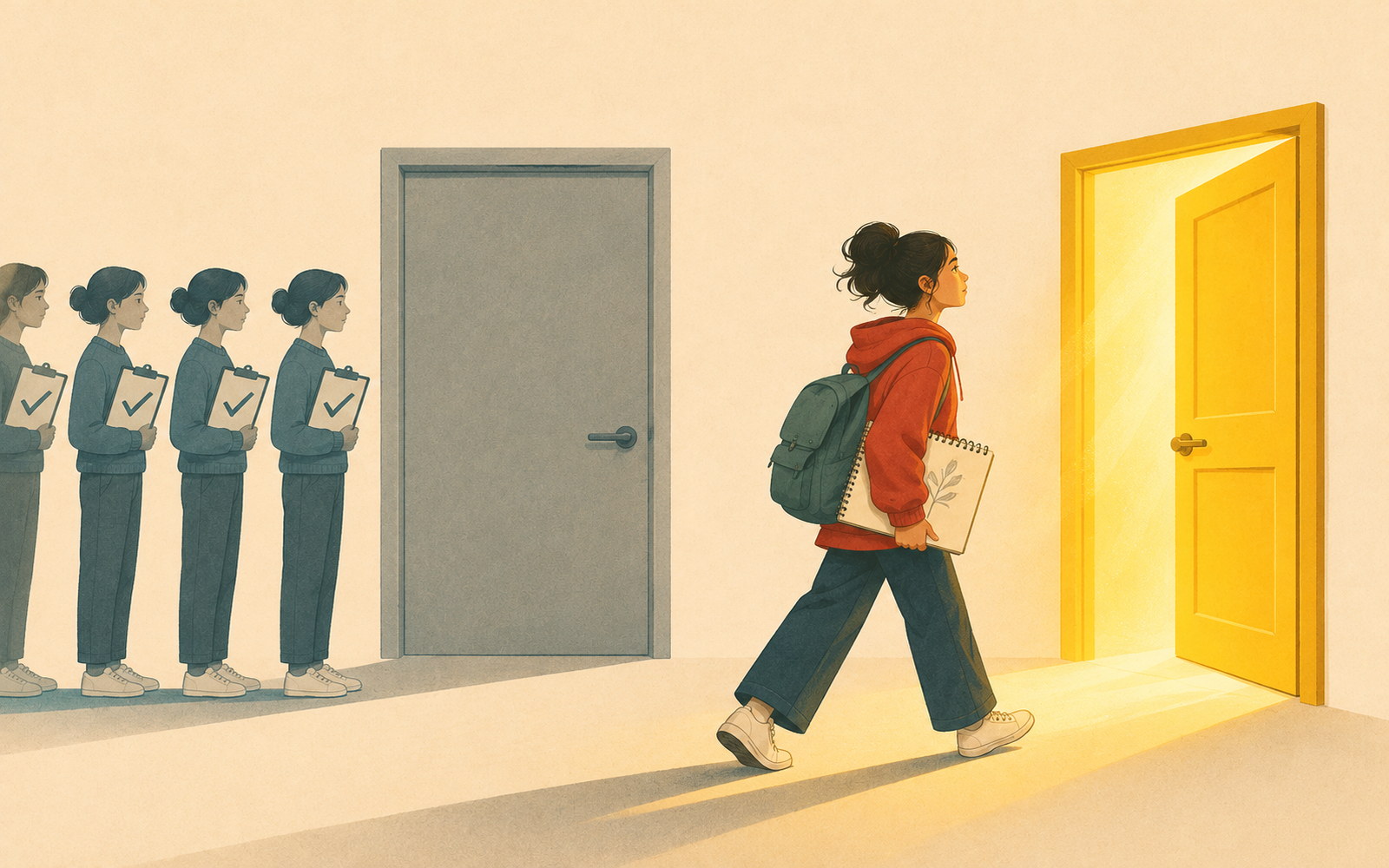
The report says that next to AI, a person can play a few roles. One is a checker: you review what the AI produced and make sure it is right. Another is a creator: you bring something the AI can't produce on its own. The report puts it in one short line: "Checkers keep AI safe. Creators make a company original."
Checking matters. Somebody has to catch the mistakes, and the report gives an example of exactly that, a quality analyst at a pharmaceutical company who spotted a defect the AI had missed. But here is the part that should get your attention. When leaders were asked how they are redesigning people's work, most described checking and judging rather than creating.
That means a lot of future jobs could end up being about watching a machine work. The more interesting jobs, the ones where you get to make something new, will go to people who know what they bring that the machine doesn't.
Why Everyone Using the Same Tool Changes Everything
Think about it this way. If every student in your class uses the same AI to write the same essay prompt, the essays start to sound alike. The report found the same thing happening to companies. AI is everywhere: 71% of the leaders surveyed said it is widely used in their organizations. But only 7% of organizations have clearly pulled ahead of everyone else.
Deloitte calls the distance between using AI and actually standing out the Originality Gap. When everyone has the same tool, the tool stops being the advantage. What's left is what's original to you: how you see things, what you notice that other people miss, and the kinds of problems you can't stop thinking about.
I have been saying a version of this for years, to adults who spent decades following someone else's playbook. You get to hear it while you still have time to build on it.
You may already sense this. When Common Sense Media surveyed 1,017 U.S. teens this spring, fact-checking and critical thinking ranked near the top of the skills teens said matter most, right behind working well with other people. Those are exactly the skills that separate someone who repeats an answer from someone who knows what to do with it.
Becoming a Creator Starts Now
You don't need to know your future job title. You do need to start noticing a few things about yourself. This is a big part of what my book Different on Purpose is about, and here is where I would start.
Notice what you notice. In a group project or a class discussion, what do you see that nobody else brings up? Write it down. Patterns in those notes are the beginning of your originality.
Say the different answer. When your idea doesn't match the room, that is exactly the moment the room might need it. You don't have to be loud. You just have to say it.
Use AI after you think, not before. Start with your own rough take, even if it's messy. Then use the tool to test it, push it or tighten it. If AI goes first, you will never find out what your version would have been.
Keep a list of problems you can't let go of. The report points out that AI can answer questions, but people still decide which problems are worth solving. The problems you keep coming back to are clues about what you will be good at creating.
Practice catching mistakes, too. Being a good checker is a real skill. When AI gives you an answer, ask whether it is actually right. The habit of questioning a confident answer will serve you in every job, creator or checker.
Nobody can predict exactly which jobs AI will change. But the report makes one thing clear: the people companies most want are the ones who bring something no tool can copy. That isn't a skill you download. It is you, getting clearer about who you are.
The machine can check the work. Only you can bring the part that's original.
Want to explore these ideas further? Learn more about my work on leadership, identity and conviction at www.theglennllopis.com.
This essay was first published on Conviction Chronicles