
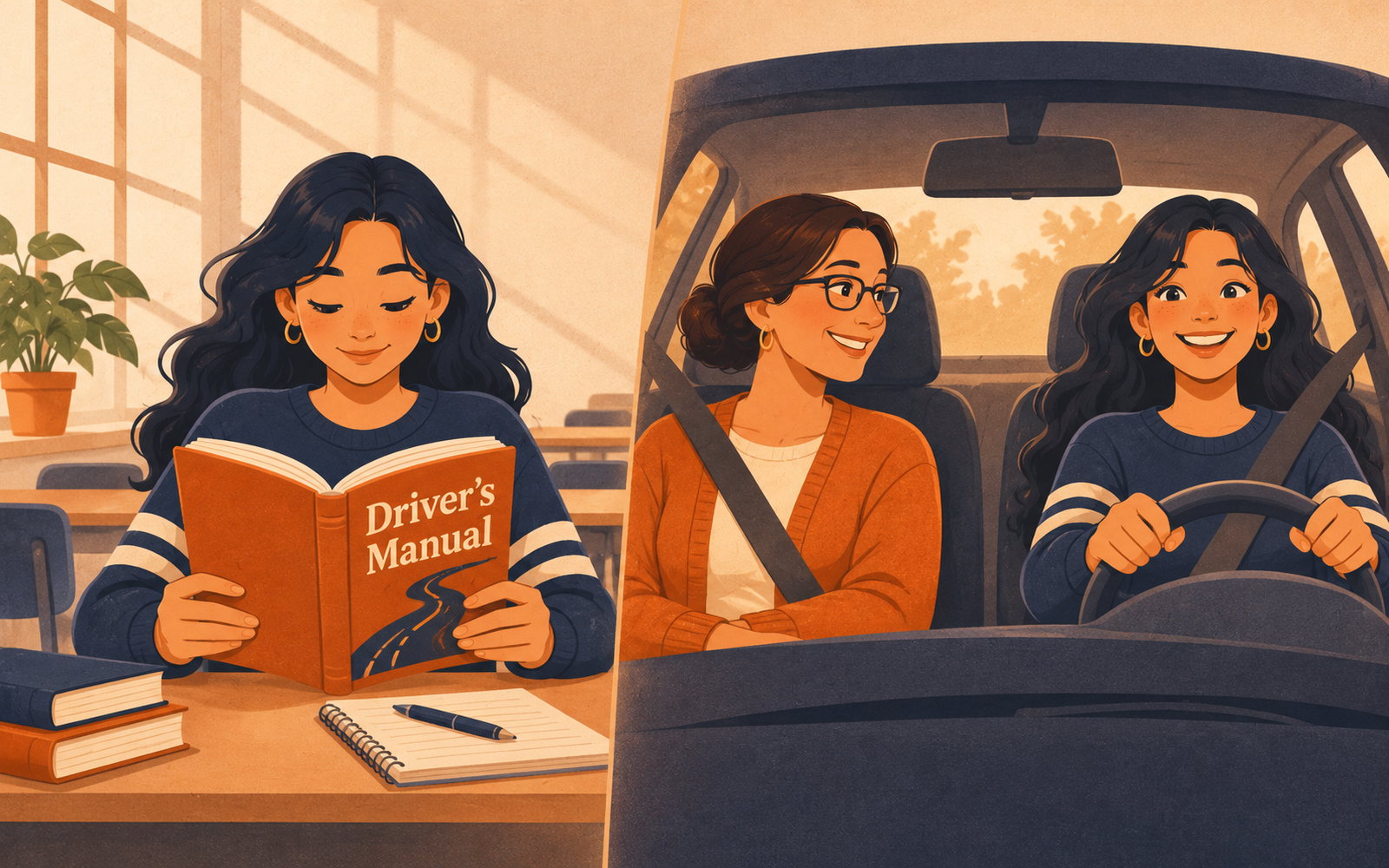
Think back to learning to drive. First there was the classroom part. Rules of the road, what the signs mean, when to yield. You could pass that part without ever touching a car.
Then someone handed you the keys, sat in the passenger seat, and said, okay, pull out.
Those are two different kinds of learning, and you needed both. An educator who reviewed the first two books in The Unmistakably You Series described them to me in exactly those terms, and I have not found a better way to explain how they fit.
Book 1 is the classroom
Lucky Isn’t Random teaches a teenager that the breaks other people seem to get are not luck. They come from small things anyone can do, and each one is simple enough to try the next day.
What a parent needs for this book is understanding. Read it, or at least know its main ideas, so that when your teen mentions a small thing they tried, you recognize it and don’t talk over it.
Book 2 is behind the wheel
Different on Purpose is where they drive. It takes the idea that they can make things happen and asks how they will do it as themselves. It goes into what gets in the way: boredom, the pull to give the safe answer, giving to others without being used.
There are more layers here, and this is the book where your involvement matters most.
What kind of involvement
Not the kind most of us default to. Researchers Nancy Hill and Diana Tyson reviewed 50 studies of middle school students and their families to find out which kinds of parent involvement help adolescents most. Helping with homework was not what mattered most. What had the strongest link to how students did was something quieter: talking with them about what they are learning, why it matters, and how it connects to what they want for themselves.
That is the passenger seat. You are not driving, and you are not grading. You are there, asking good questions, and letting them steer.
From the passenger seat
Ask what they tried, not what they read. “Did you do any of it this week?” opens more than “How’s the book?”
Stay quiet a beat longer than is comfortable. They will fill the silence with the real answer.
Resist grabbing the wheel. If they are heading somewhere you would not have chosen, ask where they think it leads.
Share your own answer. The questions in Book 2 are hard for adults too. Tell them one of yours.
Nobody learns to drive from the manual alone, and nobody learns it alone in the car. Read the first book with them. Ride along for the second.
Want to explore these ideas further? Learn more about my work on leadership, identity and conviction at www.theglennllopis.com.
This essay was first published on Conviction Chronicles